Rincewind the wizard ( B. Mgc., Unseen University [failed] ) explains to Twoflower the tourist (a word which, Rincewind had decided, meant “idiot”), the laws that govern (their) (fictional) universe.
The Law of Conservation of Reality; demands that the effort needed to achieve a goal should be the same regardless of the means used.
What does our Law of Conservation of Energy tell us about our (non-fictional) world?
The Law of Conservation of Energy; states that Energy cannot be created nor destroyed – only converted from one form to the other.
What does this imply?
For instance, in an electrostatic system, the line integral of the electric field around a closed path will have to amount to zero. What does that even mean? Under the effects of an unchanging electric field, the work done on a test particle to take it across a path and bring it back to it’s original point of residence must amount to zero – meaning all the added energy required to move it across the electric field must amount to zero given that it ends up at the same point. Otherwise you would have been able to create energy.
Now, what does Rincewind wish?
“Rincewind thinks he ought to be able to harness the lightning,” said the picture imp, who was observing the passing scene from the tiny doorway of the box slung around Twoflower’s neck. He had spent the morning painting picturesque views and quaint scenes for his master, and had been allowed to knock off for a smoke.
“When I said harness I didn’t mean harness,” snapped Rincewind. ” I meant, well, I just meant that–I dunno, I just can’t think of the right words. I just think the world ought to be more sort of organized.”
“That’s just fantasy,” said Twoflower.
“I know. That’s the trouble.” Rincewind sighed again. It was all very well going on about pure logic and how the universe was ruled by logic and the harmony of numbers, but the plain fact of the matter was that the Disc was manifestly traversing space on the back of a giant turtle and the gods had a habit of going around to atheists’ houses and smashing their windows.
(NTRB being an abbreviation of, note to readers of this blog, as previously introduced in first blog)NTRB:
As we see, Rincewind is longing for something else. As he said before, he always thought there must be a better way of doing things (than magic).
In the prologue to the second chapter, we read about the game the gods are playing. We read how the character the goddess Love is playing dies in the fire of Ankh-Morpork. She then brings out two new pieces to promote as her champions. The two pieces are a wizard and a clerk.
The story then continues,
There was a faint sound, hardly louder than the noise of the bees in the rosemary by the road. It had a curiously bony quality, as of rolling skulls or a whirling dice box. Rincewind peered around. There was no one nearby.
For some reason that worried him.
Then came a slight breeze, that grew and went in the space of a few heartbeats. It left the world unchanged save in a few interesting particulars.
There was now, for example, a five-meter tall mountain troll standing in the road. It was exceptionally angry. This was partly because trolls generally are, in any case, but it was exacerbated by the fact that the sudden and instantaneous teleportation from its lair in the Rammerorck Mountains three thousand miles away and a thousand yards closer to the Rim had raised its internal temperature to a dangerous level, in accordance with the laws of conservation of energy. So it bared its fangs and charged.
(NTRB:How cheeky for him to talk about the law of conservation of energy now! I can almost see him smile.)
exacerbated
verb, with object
Make (a problem, bad situation, or negative feeling) worse.
origin> mid 17th century from Latin exacerbat- ‘made harsh’, from the word exacerbare, from ex-(expressing inducement of a state) + acerbus ‘harsh, bitter’.
heather
noun
A purple-flowered Eurasian heath that grows abundantly on moorland and heathland. Many ornamental varieties have been developed.
origin> Old English hadre, hedre (recorded in place names), of unknown origin.

…The blade plunged on into the heather at the side of the track.
There was the faintest of sounds, like the rattle of old teeth.
The sword struck a boulder concealed in the heather–concealed, a watcher might have considered, so artfully that a moment before it had not appeared to be there at all. It sprang up like a leaping salmon and in mid-ricochet plunged deeply into the back of the troll’s gray neck.
NTRB: the faintest of sounds, the rattle of old teeth,…
the gods playing dice somewhere beyond time and space
NTRB: In the proceeding passages, Twoflower enters the temple of Bel Shamharoth. Is Bel Shamharoth a reference to Cthulu?
“The Soul Eater. His number lyeth between seven and nine; it is twice four,” Rincewind quoted, his mind frozen with fear.
NTRB: Bel Shamharoth is associated with the number 8. This number is cursed for wizards and they never come close to it.
Questions to readers and questions to myself! Questions I asked before but could not answer. What does it mean for the Devil to have a number? I’ve read somewhere before that the number 666 had something to do with some Romans. I faintly remember it being said that the number was a code for a high ranking Roman official, maybe it was Julius Ceaser? Was it because that roman official whom I can’t remember, killed and persecuted a lot of Christians? I believe I read somewhere that this number was used to refer to this official without anybody understanding that he was being referred to, so that Christians could talk about him without fearing persecution. But, what is the deal with the number 7? I’ve heard about the importance of the number 7 and I think it holds occult significance too. But why? Is there a connection between 7 and the devil too? At least there is a simple explanation for the number 666, but 7 seems to hold deeper meaning than that. I guess it must be something from the astrology of ancient civilizations.
~-~-~-~
As Twoflower descends into the depths of the Temple of Bal Shamharoth, Rincewind gets captured by a dryad and is sucked in to a palace inside a tree.
too clever by half
saying

But why were there dryads at all? As far as he could recall, the tree people had died out centuries before. They had been out-evolved by humans, like most of the other Twilight Peoples. Only elves and trolls had survived the coming of Man to the Discworld; the elves because they were altogether too clever by half, and the trollen folk because they were at least as good as humans at being nasty, spiteful and greedy. Dryads were supposed to have died out, along with gnomes and pixies.
NTRB: Rincewind manages to escape from the dryads and gets teleported into the temple, right where Twoflower is. He is once again saved by the spell in his mind, without having to actually use the spell.
Now, what’s the deal with the descriptions in this passage?
Twoflower stopped. The reason for this was the bright point of light that had popped into existence a few feet from his eyes. It grew rapidly, and after a few seconds was the tiny bright shape of a man. At this stage it began to make a noise, or, rather, Twoflower started to hear the noise it had been making all along. It sounded like a sliver of a scream, caught in one long instant of time.
The iridescent man was doll-sized now, a tortured shape tumbling in slow motion while hanging in midair. Twoflower wondered why he had thought of the phrase “a sliver of a scream” . . . and began to wish he hadn’t.
It was beginning to look like Rincewind. The wizard’s mouth was open, and his face was brilliantly lit by the light of–what? Strange suns, Twoflower found himself thinking. Suns men don’t usually see. He shivered.
NTRB: Is this all a reference to the H.P. Lovecraft books? By the light of strange suns… This sounds like its a phrase from somewhere else. Are these descriptions reference to another book?
Twoflower and Rincewind get lost in the temple. They encounter Hrun the Barbarian, and after accidentally saying the number 8 too many times, which is the unholy number of the primeval demon of this temple, they end up summoning him. Bel Shamharoth appears out from under an altar, and tries to “eat their souls”. However, Rincewind successfully manages to blind the primordial creature’s one single giant eye, which sends it back down into the abyss from whence it came!
Hrun the Barbarian then gets to work plundering the treasures of the temple, as barbarians typically do after killing the inhabitants.
rictus
noun
A fixed grimace or grin.
origin> Late 17th Century (denoting the opening or gaping of the mouth): from Latin, literally ‘open mouth’, from rict- ‘gaped’, from the verb ringi.
“Shuddup,” said Hrun. He was using Kring to lever the top off the altar. He looked up at Rincewind and grinned. Rincewind hoped that rictus-strung grimace was a grin.
grimace
noun
An ugly, twisted expression on a person’s face, typically expressing disgust, pain, or wry amusement.
origin> Mid 17th century from French, from Spanish grimazo ‘caricature’, from grima ‘fright’.
grin
intransitive verb (no object)
1 – Smile broadly, especially in an unrestrained manner with the mouth open.
1.1 – Express with a broad smile.
1.2 – Grimace or appear to grimace grotesquely in a way that reveals teeth.
origin> Old English grennian ‘bare teeth in pain or anger’, of Germanic origin; probably related to groan.
NTRB: It is very hard to simply read through The Color Of Magic. One does not simply read through TCOM.
From the moorland rimward of the wood they watched the battle between the trees and Time, which could only have one ending. It was a sort of cabaret to the main business of the halt, which was the consumption of quite a lot of a bear which had incautiously come within bowshot of hrun.
I cannot simply understand this without analyzing it. I previously learned what a moorland is when I looked up the meaning of the word heather. It is a sort of open field with grass and like. It is similar to a heathland, which is a field full of heather.
Since there is no south or north on the discworld, the heroes must stand rimward of the wood.
cabaret
noun
Entertainment held in a nightclub while the audience eats or drinks at tables,
origin> Mid 17th century (denoting a French inn): from Old French, literally ‘wooden structure’, via Middle Dutch from Old Picard camberet ‘little room’. Current senses date from the early 20th century.
So what this whole passage tells us is that, when Bel Shamharoth receded into the nothingness from whence it came, the power keeping the temple together was also sucked in with him. And when it was no more, Time seeped back in, to claim the temple. It is described in the book, “The boiling interface between decaying magic and ascendant entropy roared down the hill…”, we see as always the description is very elaborate in the proper coverage of the magical and logical aspects of this universe. The magic kept the temple together. Magic is present in this reality, in the universe Discworld resides in. Magic can keep a temple from Time. So that it can be excluded from it and keep its integrity. When magic disappears, the built-up entropy, which even though the Discworld is magical, still holds power over all things real, comes in to bring the temple down. Entropy as we know it is the measure of ordered-ness of a system. It is a measure of randomness.
The first law of thermodynamics states that, when energy passes into or out of a system (as work, heat, or matter), the system’s internal energy changes in accord with the law of conservation of energy.
The second law may be formulated by the observation that the entropy of isolated systems left to spontaneous evolution cannot decrease, as they always arrive at a state of thermodynamic equilibrium, where the entropy is highest.
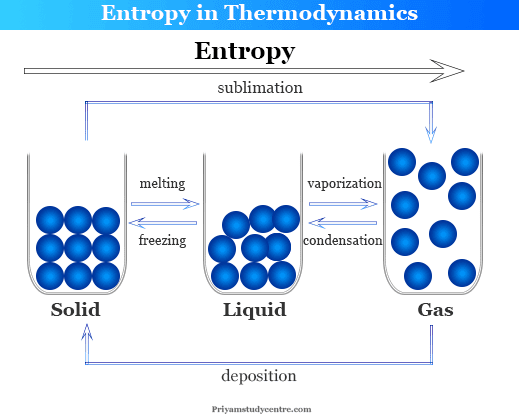
AS WE SEE above, a liquid vaporizing into a gas will suck out energy from its exterior, and the gas molecules will have more energy, as can be readily ascertained from observation, as they have more entropy.

When Magic moves out, the fundamental laws regain prominence, and the built up entropy descends on the temple, crushing it into rubble, flinging its rocks around, then the rot and the growth go rampant, and moss cover the highly disorganized stones of what was once the temple.
…..
The heroes watch this happen, but this is merely a ‘cabaret’, as the main reason for them stopping was for Hrun to eat the bear he has shot. A bear that came too close to him, which resulted in him shooting it with his crossbow. And as we know now, since we’ve looked up the meaning of the word cabaret, they are basically enjoying a meal, and watching a show.
 Giray's Sandal