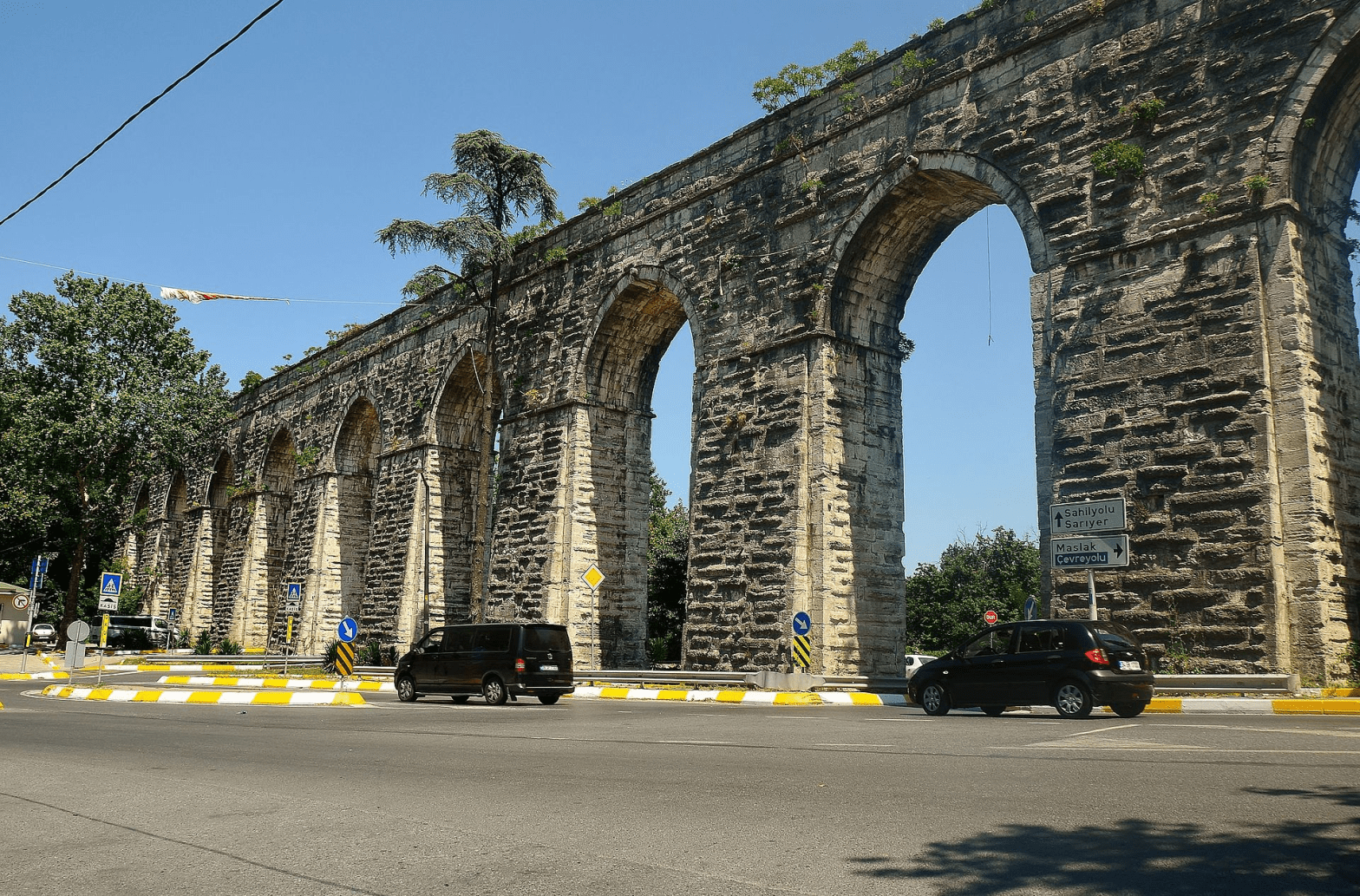
on my way to the shores lying North of Istanbul, in the green outskirts of the city, i had been passing by a colossal stone structure:
A bridge with arches beneath that was secluded by the forest on one side, and turned into a long stone wall on the other, which disappeared into the ground.
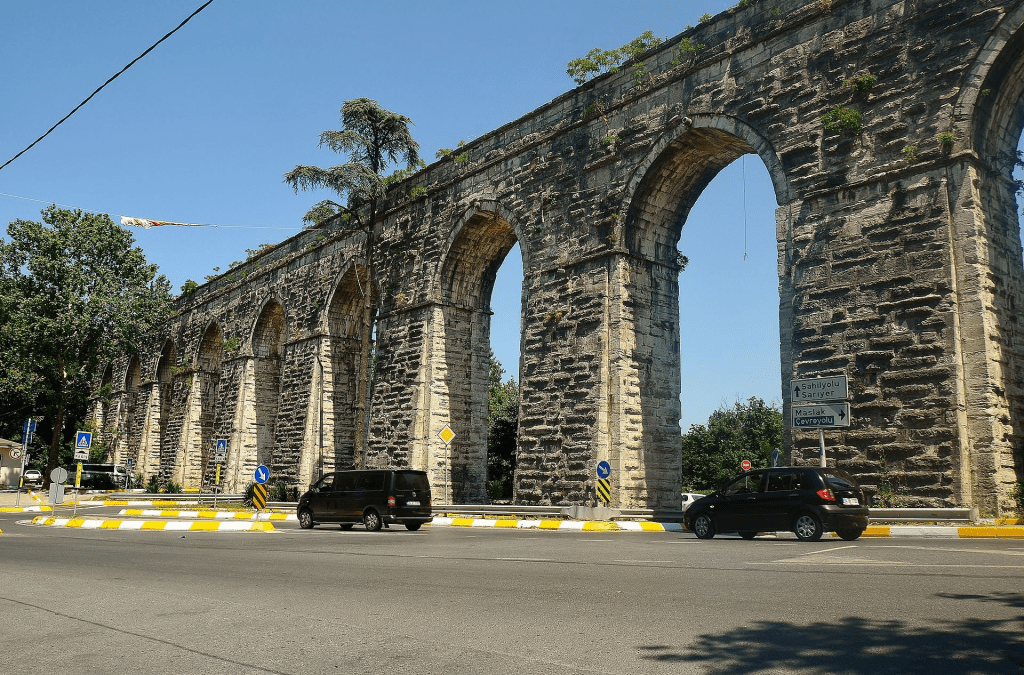
I was fascinated by this structure. Probably built by the Ottomans (a guess i made due to its good condition). An obsolete building that now served no purpose, but still displayed great magnificence and boasted of the civility of those who built it.
What was fascinating to me about this structure was how it was still in good condition but served no practical purpose, only for the reason that other systems had taken its place. If we had no plumbing today, this structure would still be perfect to use.
So, it was a service that outlived its era. Like a reverse ozymandias, we were looking not at a sphinx covered in sand, but at a sphinx in the middle of a modern city, with no divinity or ceremonial functionality attached to it, anymore.
Some days ago i visited an underground cistern in the heart of Istanbul’s old city. A cistern built by the Byzantines, when they were still called Romans, and was then taken over by the Ottomans, who still made many improvements and kept using it till 1800s.
A cistern with more than a 1000 years of use.
Of course, it fell in and out of fashion. First built as part of a growing metropolis; Istanbul, as it turns out, was famously a city that always had water problems.
Even when the cistern was forgotten and fell out of use, new rulers looking to manage their water crisis, rediscovered its usefulness. They put it back in order and integrated it into their growing, new, water management systems.
I am thinking the arches i described in the beginning were one of these new water management systems.
Arched waterways no doubt pioneered by the Romans, a system that must have improved but did not change in appearance over the centuries since it was first built.
The arches i saw in the forests around Sarıyer must’ve been an Ottoman water system, that might have ultimately connected to the old Byzantine cistern in Sultanahmet.
A poetic picture: The ancient Roman cistern, was now fed with water from the new Ottoman waterways, extending all the way from the fountains of the Belgrade forest of Hacıosman, to the heart of the city, to the cisterns buried beneath the old city square of Sultanahmet.
 Giray's Sandal