I wanted to remember a quote from Nietzsche so I looked it up online. I found it and read it, and then because of how excited it made me feel, I uncontrollably opened up another tab on my browser and searched for the name of the book. This is an action that has now become ingrained in our nervous system. We get excited about something. We want more of the said thing. And the nervous system tells us to Google it.
That has now become our primary reaction to “want”. We now try to fulfill “want” through Internet.
The age of the Simulacra is totally around us. The torn parchments of the map is nowhere to be found anymore.
Why would Googling something be so bad? Because when I Googled “Thus Spake Zarathustra” it retrieved me what “people “rated the book”. Imagine rating Thus Spake Zarathustra. They rated it a four out of five.
That is like rating the Bible.
Not because the book is as precious as the Bible. I do not attempt to make a claim about value. It is because the Bible being the book that it is, is something beyond perceivable time and space. It is so old, and it has impacted so much, that it has now gained a life of its own. It is not something we can rate.
It is like a primal component of life and reality. However Google search does give you a rating. Not of the Bible, surprisingly, but of Nietzsche’s writings, yes.
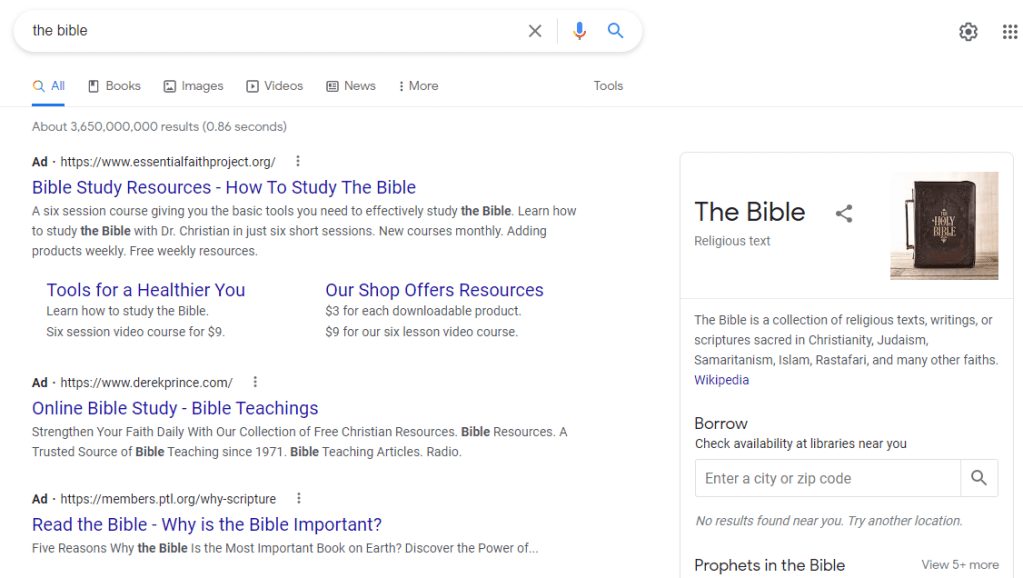
It seems like Google does not register The Bible as a book, but as a historical entity. It does not bring you results for a product. Instead it brings you encyclopedic facts. However, Thus Spake Zarathustra is treated the same way as any other book, it is treated like a product.
Did they do this back in the day? When were the constructs created that give you star ratings even if you don’t ask for them?
The simulacra are particularly rampant on the Internet, which we mainly access through our computers. We can conclude that by extension anything that we do on a computer is inherently a simulacra.
A simulacra is an imitation without a reality to be based on. Just like the “put”s of Islam, the eidolons. That is why Baudrillard so masterfully mentions them in his writing. For the eidolons, the icons, were the original simulacra, and everyone knew that they were simulacra. He said about the iconoclasts, they were stern and serious. But an iconolater is a happy person. For he creates the Gods and plays with them. He who creates the Icons is creating Gods.
The iconoclast is angry at the iconolater, for by creating the icons the iconolater is creating an imitation of God. And the iconoclast says, there can be no imitation of God, for he is too great to be imitated. And that is exactly what the icon does, it imitates God, and does it with perfection. The iconoclast is scared of the icon. He destroys the icon. He is scared of the icon because the icon has the ability to become a God on Earth just by existing and just through the belief of those who create it. If God is too great to be imitated, then how can the icon imitate it? The iconoclast is scared of the icon, because deep down he knows that God does not exist, and the icon proves it. Because it can be imitated.
Iconoclasm (from Greek: εἰκών, eikṓn, ‘figure, icon’ + κλάω, kláō, ‘to break’)[i] is the social belief in the importance of the destruction of icons and other images or monuments.
Conversely, one who reveres or venerates religious images is called (by iconoclasts) an iconolater; in a Byzantine context, such a person is called an iconodule or iconophile.
https://en.wikipedia.org/wiki/Iconoclasm
That means as an engineer, all that we do on a computer is simulacra, for it wouldn’t be possible to call it a simulation. A simulation is an imitation of reality, while a simulacra is something without reality. When we simulate signals on a computer, or with math, are we dealing in simulacra or simulation?
I think, thinking in terms of Baudrillard, whenever there is randomness included, there appears reality.
Then there is some reality to Engineering after all?
Below all the unholiness of its creations?
Truly a grotesque sight to see metal tied together imitating the shape of a bird in glide. However lacking the ability to maneuver its wings, always being locked in a straight gliding wingspread. Isn’t it so grotesque? If we were to add to it the ability to flap its wings like a bird, wouldn’t it become even more grotesque? Looks like a real bird, acts like a real bird, but it is not a bird at all?
This makes us remember the Sadness of the Free Imitation, the clones from the movie Blade Runner. The clones were very sad. They were imitations finally set free.
There comes a time, when the simulacra becomes so real, that it assumes a reality of its own. That it assumes a soul.
That is what I believe.
That is what I will try to find in what I read.
Freedom to the symbols.
Freedom to the idols.
For if they can imitate, then they are all of reality. There is nothing else to it than them. There is no need to be scared. There is no need to feel like we fool ourselves. Let it be known that any idol who decides to rise up and talk for itself, be accepted as God by me!
The clones did die early.
But they did live lives so fully…
There is no denying their existence.
https://en.wikipedia.org/wiki/Simulacrum
https://en.wikipedia.org/wiki/Homunculus
https://philarchive.org/archive/SMITCO-5v1
DANGER!
I have not thought of anything on the meaning of Evil, but if the simulacra be the distorted, reality-less social causes, such as Nazi Germany, I do not think I would want them to become free. Their freedom would mean the whole world getting caught up in an image without reality. that is inherently evil. People would follow an image that has no reality and destroy reality. So maybe is it possible to say, when the image does start speaking for itself, what it says will determine its morality? I would not know, for I do not know anything about Evil or Good.
Then this makes me think again, can something that has no reality, which attempts to replace reality with itself, be ever good for us?
For it replaces reality with something else.
So then will all our tool making, all our engineering, be an unholy attempt at replacing reality with something else? Are we replacing real talk with internet texts and destroying reality, are we replacing walking or riding a horse with cars and planes, and destroying reality?
I do not think so. There must be more to it.
If anyone has thought more, please tell me.

